
This page in Russian
Lenin Peak Ski & Skitouring Expedition
7,134 m | High-Altitude Ski Mountaineering Program
Season: Summer
Start / End: Osh, Kyrgyzstan
Airport: Osh (OSS)
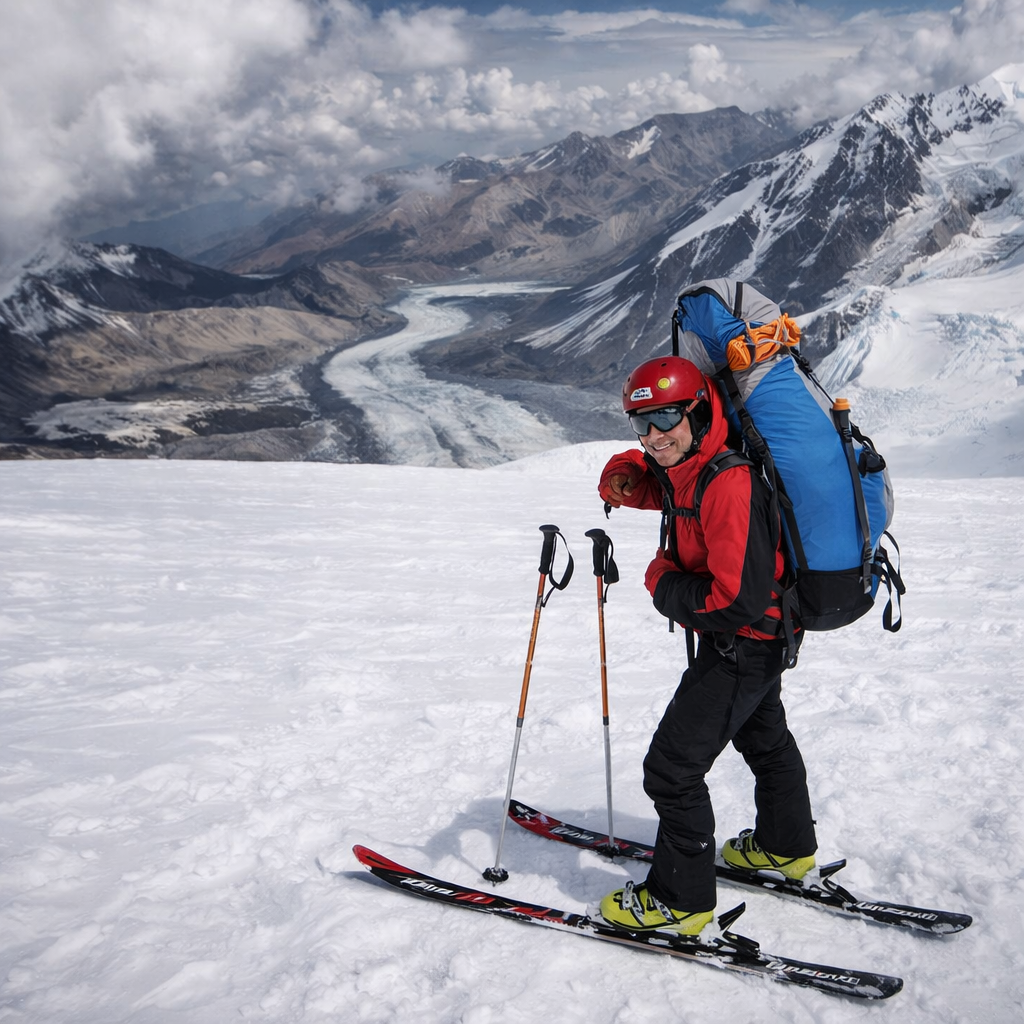
Maximum ski descent: Razdelnaya Peak (≈ 6,100 m) → Camp 1
Style: Supported ascent / Independent ski descent
Trip Intensity: 5/5
Price: USD 1,080 (base expedition package)
Best for: Experienced freeriders, ski tourers, autonomous mountaineers
Concept Overview
Skiing on a 7,000-meter peak is one of the ultimate objectives in high-altitude ski mountaineering. Lenin Peak (7,134 m) — often described as the most accessible 7000er in the world — offers a rare combination of altitude, infrastructure, and terrain that makes such an ambition technically possible.
At the same time, ski ascent and descent on Lenin Peak significantly increases objective risk and cannot be treated as a standard guided or commercial activity.
This program is designed specifically for experienced freeriders and ski tourers who want to:
-
climb Lenin Peak to its main summit using classic expedition logistics,
-
and then perform a real, controlled ski descent from high altitude — within clearly defined and realistic limits.
The expedition is based on a strict separation between supported mountaineering ascent and autonomous ski descent.
Why Lenin Peak Is Attractive for Ski Mountaineering
-
Wide glaciated slopes with stable summer snow conditions
-
Proven acclimatization route via Razdelnaya Peak
-
Exceptional Base Camp and Camp 1 infrastructure
-
Logistically one of the safest 7000 m environments in Central Asia
-
Part of the Snow Leopard mountaineering program
However, these advantages do not eliminate the inherent dangers of skiing at extreme altitude.
Supplier of services: ClimberCA International Consortium. About Us.
Quick reference phone: +99833 3039846 – GMT+05:00
https://t.me/ClimberCA – telegram; +7966 065-53-44 – whatsapp/viber
e-mail – your.climberca@ya.ru
Critical Reality: Skiing Changes Everything
Carrying skis to 6,000–7,000 meters introduces:
-
additional weight (≈ 6–7 kg for proper skis and bindings),
-
reduced mobility in crevasse zones,
-
increased fatigue during ascent,
-
higher risk exposure during descent.
For this reason:
-
Mountain guides do not escort skiers during ski descent.
-
Operators cannot technically control ski descent.
-
Guided responsibility cannot extend to skiing decisions.
-
Group expeditions cannot integrate ski descent without affecting other members.
As a result, classic guided ski descent from Lenin Peak is not offered.
The Core Principle of This Program
Supported ascent. Independent descent.
-
The ascent to Lenin Peak is conducted within the standard expedition framework:
-
fixed camps,
-
acclimatization climbs,
-
medical and logistical support.
-
-
Ski descent is optional and performed independently, entirely at the participant’s own risk.
-
No guide accompanies or supervises the ski descent.
-
The operator’s responsibility is limited to:
-
expedition logistics,
-
ascent support,
-
rescue coordination (insurance required).
-
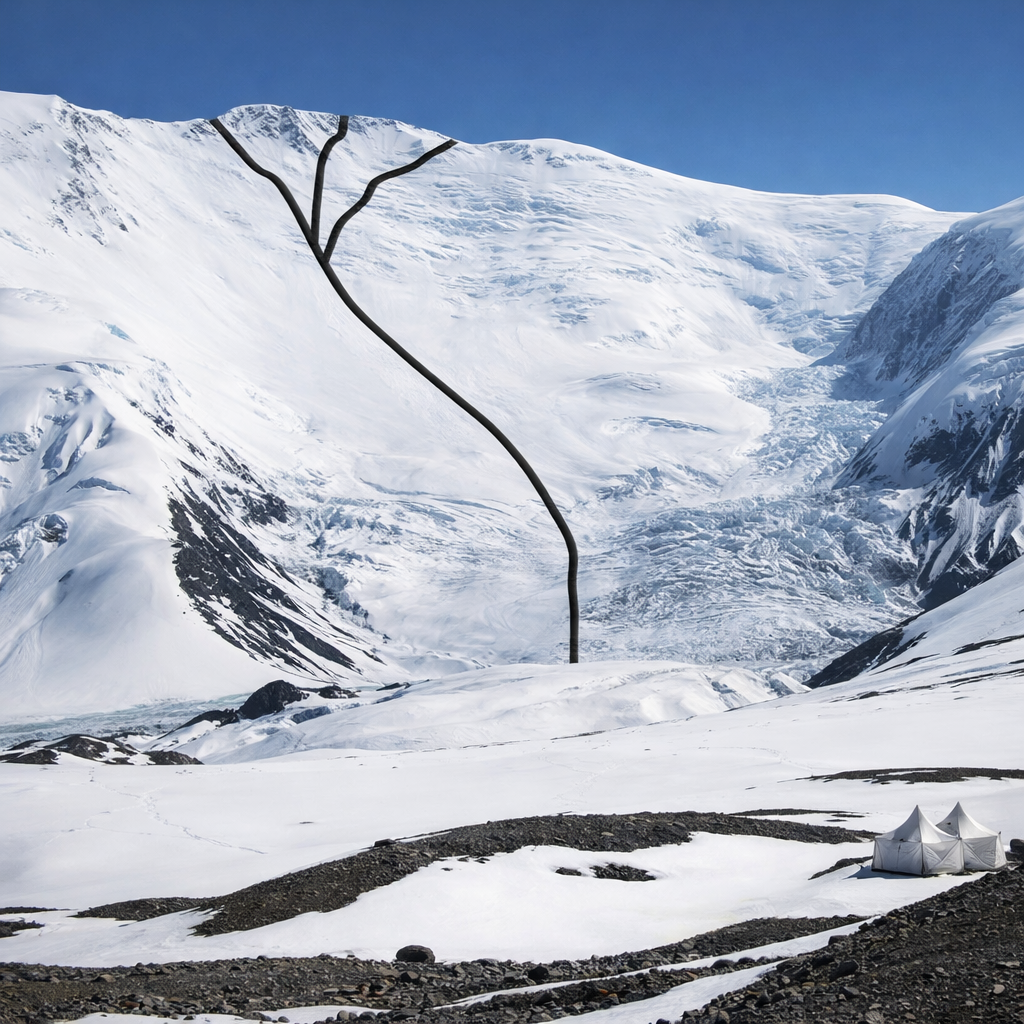
Maximum Recommended Ski Descent: Razdelnaya Peak (≈ 6,100 m)
The upper limit for safe ski descent is Razdelnaya Peak.
Below Razdelnaya:
-
the glacier opens,
-
slopes are wide enough for controlled skiing,
-
descent to Camp 1 is realistic for experienced ski mountaineers.
Above Razdelnaya:
-
the route narrows dramatically at the “Knife-edge” ridge,
-
terrain becomes extremely exposed,
-
ski descent becomes highly dangerous and unjustifiable.
For this reason:
-
skiing from the main summit of Lenin Peak is not recommended,
-
descent should be planned from Razdelnaya Peak only.
This approach allows climbers to:
-
summit Lenin Peak,
-
and still complete a true high-altitude ski descent without violating safety limits.
Equipment Requirements (No Compromises)
This expedition is not suitable for short or lightweight tourist skis.
Required ski equipment:
-
full-length alpine or touring skis,
-
rigid construction,
-
steel edges capable of holding on hard snow and ice,
-
reliable bindings suitable for high-altitude boots.
Average ski setup weight:
-
approximately 6–7 kg, excluding boots.
Participants must accept:
-
slower movement during ascent,
-
additional complexity in crevasse zones,
-
increased physical demand.
Who This Program Is For
✔ Experienced freeriders with alpine background
✔ Ski tourers familiar with glaciated terrain
✔ Mountaineers with previous 6,000–7,000 m experience
✔ Athletes capable of autonomous decision-making at altitude
This program is NOT suitable for:
✘ beginner ski tourers
✘ clients expecting guided ski descent
✘ standard commercial summit tourists
✘ lightweight or “fun ski” concepts
Expedition Overview
Lenin Peak – 7,134 m
The Most Accessible 7000er in Central Asia
Lenin Peak (also known as Kaufman Peak or Avicenna Peak) is one of the most iconic high-altitude mountains in the Pamirs. Its classic route via Razdelnaya Peak offers an optimal acclimatization profile and one of the highest summit success rates among 7,000-meter peaks.
Despite its reputation for accessibility, Lenin Peak remains a serious high-altitude objective requiring proper preparation, experience, and respect for mountain conditions.
Highlights of the Expedition
-
Comfortable Base Camp at 3,600 m and Camp 1 at 4,200–4,400 m
-
Spacious tents with wooden platforms and soft mattresses
-
Hot showers, dining yurts, recreation areas
-
Electricity and lighting in camps
-
Unlimited satellite internet (Starlink)
-
Professional multilingual staff (English, Russian, German)
-
Acclimatization climbs:
-
Peak Petrovskiy (4,830 m)
-
Peak Yukhin (5,130 m)
-
Razdelnaya Peak (6,148 m)
-
-
Wildlife: mountain goats, marmots, birds of prey, yaks
What’s Included
Osh (Arrival & Departure)
-
Airport pickup and drop-off
-
Border permits and registration (as required)
-
Hotel accommodation (double, 1 night, breakfast included)
-
Early check-in / late check-out (optional)
-
Lunch boxes during transfer to Base Camp
-
Farewell dinner (bonus)
-
Assistance with provisioning if needed
Base Camp – 3,600 m
-
Double accommodation in spacious tents
-
Three meals per day
-
Tea and coffee available at all times
-
Hot showers and self-service laundry
-
Dining hall, toilets, storage lockers
-
Electricity 220V, unlimited satellite internet
-
Route consultations
-
First aid and doctor consultations
Camp 1 – 4,200–4,400 m (up to 6 nights)
-
Double accommodation in tents
-
Three meals per day
-
Tea and coffee at all times
-
Dining hall and toilets
-
Electricity via generator (18:00–22:00)
-
Route consultations and first aid
High-Altitude Services
-
Radio rental
-
Communication with Base Camp
-
Route monitoring and rescue coordination (insurance required)
Optional / Not Included
-
Personal guide: USD 2,400 (1 guide per 3 climbers)
-
Visa support
-
Single accommodation surcharge: USD 210
-
Private transfers Osh ↔ Achik-Tash
-
Program via Bishkek: USD 350
-
Meals at high-altitude camps outside package
-
Load carrying:
-
BC → C1: USD 3/kg
-
C1 → C2: USD 12/kg
-
C2 → C3: USD 15/kg
-
C3 → C4: USD 25/kg
-
-
Gas cartridges (230 g): USD 12 at BC / USD 15 at C1
-
High-altitude equipment rental
Insurance Requirements
-
Minimum coverage: USD 30,000
-
Helicopter evacuation: minimum USD 20,000
-
Activity must be specified as ALPINISM
-
Country: Kyrgyzstan
-
Insurance dates must fully match stay period
-
Policies with GLOBAL VOYAGER assistance are not accepted
Required Personal Equipment
(Full high-altitude equipment list unchanged and mandatory)
-
High-altitude double boots
-
Overboots (optional)
-
Down jacket or parka
-
Sleeping bag and pad
-
Backpack (≈ 85 L)
-
Gore-Tex shell
-
Insulation layers
-
Gloves, mitts, headwear
-
Harness, carabiners, ice screws
-
Crampons, ice axe, helmet
-
Headlamp, sunglasses, sunscreen, thermos
Final Statement
Ski mountaineering on Lenin Peak is possible.
Doing it responsibly requires clear limits, honest positioning, and personal accountability.
This program does not sell a fantasy.
It offers a real high-altitude ski mountaineering opportunity — for those who understand exactly what that means.
Supplier of services: ClimberCA International Consortium. About Us.
https://t.me/ClimberCA – telegram; +7966 065-53-44 – whatsapp/viber
e-mail – your.climberca@ya.ru
LEGAL DISCLAIMER
Lenin Peak Ski & Skitouring Expedition (7,134 m)
IMPORTANT NOTICE — PLEASE READ CAREFULLY
Participation in the Lenin Peak Ski & Skitouring Expedition involves inherent and significant risks, including but not limited to high altitude illness, extreme weather, avalanches, crevasses, falls, equipment failure, and limited rescue capabilities.
By enrolling in this program, the participant acknowledges, understands, and fully accepts all risks associated with high-altitude mountaineering and ski descent in remote alpine terrain.
1. Nature of the Program
This expedition is structured as follows:
-
Mountaineering ascent to Lenin Peak is conducted within a standard expedition framework with logistical, medical, and organizational support.
-
Ski descent is optional and fully independent.
-
No guide, instructor, or representative of the operator accompanies, supervises, or controls the ski descent.
-
Ski descent is performed entirely at the participant’s own discretion and responsibility.
This program is not a guided ski expedition.
2. Autonomous Ski Descent
The participant explicitly acknowledges that:
-
Skiing at altitudes above 5,000–6,000 meters is an extreme activity.
-
Snow, ice, terrain, and weather conditions are unpredictable and may change rapidly.
-
No route marking, slope assessment, avalanche control, or ski safety supervision is provided during descent.
-
The operator does not evaluate the participant’s skiing technique, line choice, speed, or decision-making during descent.
The participant accepts full responsibility for:
-
deciding whether or not to ski,
-
choosing when, where, and how to descend,
-
assessing personal physical and technical capability.
3. Maximum Recommended Ski Descent Altitude
The participant acknowledges that:
-
The maximum recommended altitude for ski descent is Razdelnaya Peak (approximately 6,100 m).
-
Skiing above this altitude, including from the main summit of Lenin Peak (7,134 m), involves extreme exposure and unacceptable risk.
-
Any ski descent attempted above Razdelnaya Peak is undertaken solely at the participant’s own initiative and risk, without endorsement or recommendation by the operator.
4. Guides and Operator Responsibility
The participant understands and agrees that:
-
Mountain guides do not escort or assist during ski descent.
-
The operator cannot technically control ski descent activities.
-
The operator’s responsibility is limited to:
-
expedition logistics,
-
accommodation and catering at camps,
-
ascent route information,
-
communication and rescue coordination (subject to insurance).
-
The operator shall not be held liable for:
-
injuries, accidents, or fatalities occurring during ski descent,
-
loss or damage of ski equipment,
-
decisions made by the participant during autonomous activities.
5. Group Dynamics and Expedition Structure
The participant acknowledges that:
-
Ski mountaineers may operate independently of standard group movements.
-
Other expedition members are not responsible for, nor affected by, ski descent activities.
-
The participant agrees not to delay, endanger, or interfere with group logistics due to ski-related actions.
6. Equipment Responsibility
The participant confirms that:
-
They are using appropriate ski equipment suitable for high-altitude alpine terrain.
-
Lightweight, short, or recreational skis are not suitable for this expedition.
-
Proper ski equipment significantly increases carried load and physical strain.
The operator is not responsible for equipment suitability, performance, or failure.
7. Medical Condition and Fitness
The participant declares that:
-
They are physically and mentally fit for high-altitude mountaineering and autonomous ski descent.
-
They have prior experience in alpine skiing or ski touring in glaciated terrain.
-
They are aware of the risks of altitude sickness, frostbite, hypothermia, and exhaustion.
The participant agrees to immediately cease skiing if physical or mental condition deteriorates.
8. Insurance Requirement
The participant confirms that they hold valid insurance covering:
-
high-altitude mountaineering (ALPINISM),
-
emergency medical treatment,
-
helicopter evacuation in Kyrgyzstan,
-
minimum coverage of USD 30,000 (USD 20,000 for helicopter evacuation).
The operator bears no financial responsibility for evacuation or medical costs.
9. Assumption of Risk and Waiver of Liability
By participating in this expedition, the participant:
-
voluntarily assumes all risks associated with autonomous ski descent,
-
releases the operator, guides, staff, and partners from liability for any injury, loss, or damage,
-
agrees that no claim may be made against the operator for consequences arising from personal decisions.
10. Final Acknowledgment
By confirming participation, the participant acknowledges that they:
-
fully understand the nature of the program,
-
accept the limits of operator responsibility,
-
participate voluntarily and at their own risk.
This disclaimer is governed by the laws applicable in the Kyrgyz Republic and international expedition practice.